
Ever thought a missed flight or a sudden medical bill could ruin your dream vacation? For travelers worldwide, getting comprehensive travel insurance is more than a luxury. It’s a must-have, experts say, before you even arrive in the United States.
This protection is the first step to a worry-free trip. Without it, a small issue can quickly become a big financial problem. You should be able to enjoy your trip without worrying about unexpected costs.
Unexpected events can happen anytime while traveling. With reliable protection, your finances stay safe as you explore the country. This guide will show why getting such a policy is crucial for every traveler.
You’ll learn how to protect your trip and find the best insurance options. Being prepared lets you make memories without worrying about emergencies. Let’s dive into why these plans are key for your peace of mind.
Key Takeaways
- Protect your budget from high medical costs in the United States.
- Secure peace of mind against unexpected trip cancellations.
- Ensure coverage for lost bags or emergency evacuations.
- Understand why international visitors prioritize these safeguards.
- Learn to identify policies that offer the best value for your journey.
What is Travel Insurance and Why Do You Need It?
Travel insurance is more than just a precaution. It’s a safety net against unexpected events that can ruin your travel plans. Whether you’re going on a domestic trip or an international adventure, the right coverage can make a big difference.
Definition of Travel Insurance
Travel insurance covers unexpected events while traveling, at home or abroad. It offers financial protection against trip cancellations, interruptions, medical emergencies, and lost or stolen luggage.
A good travel insurance policy gives you peace of mind. It protects you from many travel uncertainties.
Key Benefits of Having Coverage
Having travel insurance coverage offers several key benefits, including:
- Emergency Medical Coverage: Covers medical costs if you get sick or hurt during your trip.
- Trip Cancellation: Reimburses you for pre-paid travel costs if you cancel your trip for covered reasons.
- Lost Luggage Protection: Pays you for lost, stolen, or damaged luggage.
- Travel Delay: Covers extra expenses from travel delays.
By understanding these benefits and having the right travel insurance, you can travel with more confidence and security.
Types of Travel Insurance Policies
Travel insurance isn’t a one-size-fits-all deal. It comes in many types to meet different traveler needs. Knowing these options helps you pick the right coverage for your trip.
Trip Cancellation Insurance
This insurance pays back your pre-paid travel costs if you have to cancel your trip. Reasons include illness, natural disasters, or travel advisories. It’s key for those who’ve spent a lot on their trips.
Medical Coverage
Medical coverage is vital, especially for trips abroad. It covers medical emergencies, evacuations, and hospital stays. Some policies also cover pre-existing conditions, but you must buy it soon after booking.
Baggage Insurance
Baggage insurance helps if your luggage gets lost, stolen, or damaged. It’s great for those with valuable items or who check many bags.
Here’s a table to help you see the differences:
| Policy Type | Coverage | Typical Benefits |
|---|---|---|
| Trip Cancellation | Pre-paid travel expenses | Reimbursement for trip cancellation due to unforeseen circumstances |
| Medical Coverage | Medical expenses abroad | Covers hospital stays, evacuations, and sometimes pre-existing conditions |
| Baggage Insurance | Lost, stolen, or damaged luggage | Compensation for baggage loss or damage |
Understanding the various travel insurance types helps you choose wisely. Pick the policy that fits your travel plans and needs.
How to Choose the Right Travel Insurance
Travel insurance isn’t a one-size-fits-all deal. You need to think about what you’re doing on your trip to find the right policy. Whether you’re looking for a relaxing getaway or an adventure, your insurance should match.
Assessing Your Travel Needs
First, think about your trip. Are you going somewhere in the U.S. or abroad? Where you go and how long you stay can affect what insurance you need.
For trips outside the country, you might need insurance that covers medical evacuations. These can be very expensive and hard to arrange. But if you’re staying in the U.S., your health insurance might cover some medical costs. Still, it’s a good idea to check how much it covers.
“Before purchasing travel insurance, check your primary home, auto, renter’s, and health insurance policies to see what is covered.”
Comparing Plans and Providers
Once you know what you need, start looking at different insurance plans. Find policies that offer the coverage you want without breaking the bank.
Here’s a comparison of what different providers offer:
| Provider | Trip Cancellation | Medical Coverage | Baggage Insurance |
|---|---|---|---|
| Provider A | Up to $10,000 | Up to $50,000 | Up to $2,000 |
| Provider B | Up to $5,000 | Up to $100,000 | Up to $3,000 |
| Provider C | Up to $20,000 | Up to $200,000 | Up to $5,000 |
Understanding Policy Details
It’s important to read the fine print of any policy you’re considering. Know what’s covered and what’s not, including any exclusions or limits.
For example, some policies might not cover pre-existing medical conditions unless you buy a waiver. Others might not cover certain activities, like extreme sports.
- Coverage limits and deductibles
- Pre-existing condition coverage
- Adventure activity coverage
- 24/7 customer support
By carefully looking at your travel needs, comparing insurance options, and understanding policy details, you can make a smart choice when you buy travel insurance.
Common Travel Insurance Myths Debunked

Many people think travel insurance is a waste of money. They believe it’s too expensive or not needed. But, it’s actually a crucial safety net for your trips.
Let’s look at some common myths and the truth behind them.
“I Don’t Need Insurance for Domestic Travel”
Some think travel insurance is only for international trips. But, domestic travel has risks too. These include trip cancellations, medical emergencies, and travel delays.
In the USA, healthcare costs can be very high. Without insurance, you might face huge medical bills, even on a domestic trip.
“The USA has some of the highest healthcare costs in the world. Even a short hospital stay can result in bills amounting to tens of thousands of dollars.”
“Credit Card Coverage is Enough”
Some think their credit card’s travel insurance is enough. But, this coverage is often limited and not complete.
| Coverage Type | Credit Card Insurance | Comprehensive Travel Insurance |
|---|---|---|
| Trip Cancellation | Limited to specific reasons | Covers a wide range of reasons |
| Medical Coverage | Often has low coverage limits | Offers higher coverage limits |
| Travel Delays | May have limited or no coverage | Typically includes coverage for delays |
“Travel Insurance Is Too Expensive”
The cost of travel insurance depends on several things. These include the trip’s length, your age, and the coverage type. But, it’s often a smart investment compared to the costs of unexpected events.
For example, cancelling a trip or dealing with a medical emergency without insurance can cost much more than a good travel insurance policy.
By knowing the truth about these myths, you can make a better choice about your travel insurance.
Travel Insurance for International Trips
International travel insurance is key for your trips abroad. It protects you from unexpected events. You face risks like trip cancellations, medical emergencies, and lost items. The right insurance can help avoid these problems and make your trip worry-free.
Importance of Coverage Abroad
Traveling without insurance is risky, especially in places like the USA. Medical emergencies can happen anytime. Without insurance, you might have to pay a lot of money. Medical coverage is a must for international travel insurance. It covers hospital costs, treatments, and evacuations if needed.
Insurance also covers trip cancellations, delays, and lost luggage. These benefits are very helpful if your trip gets disrupted.
Tips for Selecting Global Policies
Choosing the right global travel insurance policy is important. Here are some tips:
- Assess your travel needs: Think about where you’re going, how long you’ll stay, and what you’ll do. This helps you know how much coverage you need.
- Compare policies: Look at different insurance options. Find one that offers good coverage at a fair price.
- Understand policy details: Read the policy carefully. Know about coverage limits, deductibles, and what’s not covered.
- Check for pre-existing condition coverage: If you have a health condition, make sure the policy covers it.
By following these tips, you can choose the best international travel insurance. This way, you can travel with confidence and enjoy your trips abroad.
Factors That Affect Travel Insurance Costs
Knowing what affects travel insurance costs helps you choose wisely. Travel insurance isn’t the same for everyone. Its price changes based on personal and trip details.
Several key elements influence your travel insurance premium. Knowing these can help you save money.
Age and Health Considerations
Your age and health play big roles in travel insurance costs. Older travelers usually pay more because they might face health problems. Costs often go up after 65.
Having a medical condition can also raise your costs. You might need extra coverage or a special policy. This can make your premium higher.
Destination and Duration of Trip
Where you go and for how long affects your insurance price. Traveling to risky or unstable places can cost more. Longer trips also mean higher risks, so they cost more to insure.
Activities Included in the Itinerary
The activities you plan can also change your insurance costs. Adventure sports and risky activities need extra coverage. This can make your premium go up.
Understanding these factors helps you find the right policy. It’s key to compare different options to get the best deal.
How to File a Travel Insurance Claim
Filing a travel insurance claim might seem hard, but it’s easier than you think. If something unexpected happens on your trip, like trip cancellation or lost luggage, knowing how to claim can help you get back what you lost.
Step-by-Step Claim Process
To start a claim, you need to follow a few simple steps. First, notify your insurance provider right after the issue happens. Most companies have a claims hotline or online portal for this.
Then, complete the claim form your insurer gives you. Make sure to fill it out fully and correctly. You’ll need to give details about what happened, like dates and locations.
Gather supporting documents to back up your claim. These might include receipts, medical records, or police reports. The exact documents needed will depend on your claim type.
As an insurance expert says,
“The key to a successful claim is providing comprehensive documentation and adhering to the insurer’s guidelines.”
Common Reasons Claims Are Denied
Knowing why claims get denied can help you avoid mistakes. One big reason is incomplete or inaccurate information on the claim form. Always double-check your form for errors.
Another reason is not providing enough documentation. Make sure you have all the necessary documents before you submit your claim. They should be clear and relevant to your situation.
Claims can also be denied for pre-existing conditions not being declared. It’s important to know what your policy covers and to tell about any pre-existing conditions when you buy insurance.
- Ensure timely notification to your insurer.
- Provide complete and accurate information.
- Submit all required supporting documents.
By following these steps and knowing why claims get denied, you can boost your chances of a successful claim.
Travel Insurance Exclusions to Be Aware Of
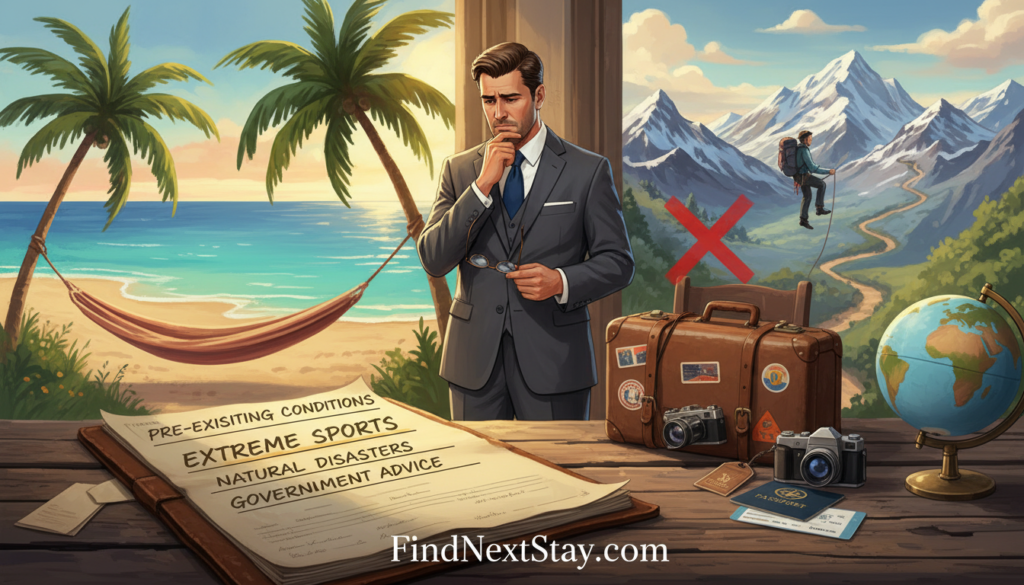
Knowing what your travel insurance doesn’t cover is as crucial as knowing what it does. It’s meant to protect you from unexpected events. But, not every situation is covered.
Pre-existing Conditions
Pre-existing medical conditions are often not covered by travel insurance. If you had a condition before buying the insurance, it might not be included. Unless you bought a policy that covers pre-existing conditions or declared your condition and it was accepted.
Key considerations for pre-existing conditions include:
- Declaring your condition at the time of purchasing the policy
- Understanding the definition of a pre-existing condition as per the policy
- Checking if your policy offers a waiver for pre-existing conditions
High-Risk Activities
Many policies don’t cover injuries from high-risk activities. This includes extreme sports like skydiving, bungee jumping, or deep-sea diving.
If you’re planning to do these activities, check if your policy covers them. Or if you need extra coverage.
Natural Disasters
Some policies cover trip cancellations or interruptions due to natural disasters. But others might not. Coverage depends on your policy’s terms and the disaster type.
It’s essential to review your policy’s stance on natural disasters and understand what is covered and what is not.
Other things not covered might include routine check-ups, dental treatment, and cosmetic procedures, as some providers list.
Being aware of these exclusions helps you choose the right travel insurance policy. One that meets your needs.
The Role of Travel Insurance During COVID-19
Travel insurance is now key when planning trips during COVID-19. The pandemic has made traveling more complex. Risks include trip cancellations and medical emergencies abroad.
Travel insurance policies have changed to cover these risks. Most plans now cover COVID-19 treatment. This helps travelers avoid unexpected medical costs while traveling.
Coverage for Pandemic-Related Incidents
COVID-19 has made travel insurance with pandemic coverage more popular. This includes:
- Trip cancellations or interruptions due to COVID-19
- Medical expenses related to COVID-19 treatment
- Quarantine costs
Travelers should find policies that cover COVID-19 risks. It’s also important to know the policy’s terms and any exclusions.
Adapting Policies to New Travel Norms
The pandemic has changed travel norms, like increased health measures. Insurance policies are now more flexible and comprehensive.
Some insurers offer cancel-for-any-reason coverage. This lets travelers cancel for any reason, including COVID-19. Others cover extra costs from travel disruptions.
Travelers need to keep up with travel insurance updates. This helps them make smart travel plans and get the right coverage.
In summary, travel insurance is crucial during the COVID-19 pandemic. By understanding its role and choosing the right policy, travelers can protect themselves from travel uncertainties.
Top Travel Insurance Providers in the U.S.
Choosing the right travel insurance can be tough. But knowing the top providers makes it easier. There are many options, so it’s key to know what makes a provider great.
Overview of Reputable Companies
In the U.S., some travel insurance companies stand out. Names like Allianz, TravelGuard, and AXA are well-known. Look at their reputation, customer service, and policy options.
Reading reviews from trusted sources is vital. It shows you what each company is good at and what they might lack. This helps you pick the right one for your trips.
Key Features of Top Providers:
- Comprehensive coverage options
- 24/7 customer support
- Flexible policy terms
What to Look for in a Provider
When picking a travel insurance provider, think about a few things. Look at the types of policies, coverage levels, and premium costs.
| Provider | Coverage Options | Customer Support |
|---|---|---|
| Allianz | Trip cancellation, medical, baggage | 24/7 |
| TravelGuard | Trip interruption, medical, travel delay | 24/7 |
| AXA | Trip cancellation, medical, baggage | 24/7 |
By looking at these factors and what top providers offer, you can choose wisely. This ensures your travel plans are well-covered.
Frequently Asked Questions About Travel Insurance
Before you buy travel insurance, it’s key to know the answers to your top questions. Travel insurance protects you from many travel risks. But, it can be tricky to understand what it covers and how it works.
What Does Travel Insurance Typically Cover?
Travel insurance covers many things, like trip cancellations, medical emergencies, and lost or stolen bags. Trip cancellation insurance pays back your travel costs if you have to cancel your trip. Medical coverage covers medical bills if you get sick or hurt while traveling. Also, baggage insurance helps if your luggage gets lost, stolen, or damaged.
- Trip cancellations or interruptions
- Medical emergencies and evacuations
- Loss or theft of baggage and personal items
- Travel delays and missed connections
Can I Get Refunds on My Premium?
Refund policies differ by insurance company. Some offer a free look period, usually 10 to 15 days, where you can cancel and get a full refund. But, after this time, refunds depend on the company’s rules. Always check the policy details and understand the refund process before buying.
When Should I Buy Travel Insurance?
The best time to buy travel insurance is right after you book your trip. This way, you’re covered if something unexpected happens and you need to cancel. Some benefits, like pre-departure coverage, are only available if you buy your policy soon after booking.
Knowing these answers helps you make smart choices about your travel insurance. This way, you can travel more securely and worry less.
Tips for Traveling Safely With Insurance
Getting ready for your trip? Having travel insurance is a great start. But, to have a safe and fun trip, you need to be ready and know what to do. Follow these simple tips to get the most out of your insurance and stay safe.
Accessible Policy Information
Make sure you can easily find your policy details. Carry your insurance card and save the 24/7 emergency helpline number in your phone. This way, you can quickly reach your provider if you need to.
Emergency Preparedness
Learn about emergency contacts and resources at your destination. Knowing who to call and where to go in an emergency can be a big help.
Understanding Local Healthcare
Find out about the local healthcare system at your destination. Knowing what to expect can help you handle any medical issues that come up. This ensures you get the care you need.
By being prepared and informed, you can travel safely with confidence. You’ll know you have the right travel insurance and the tips to stay safe.